Blog
Resources for educators and students

How to Teach AI in Marketing Education without Sacrificing Critical Thinking
AI is changing how students approach their work, as tools like ChatGPT and NotebookLM can generate answers in seconds.
But marketing has never been about quick answers. It’s about judgment, trade-offs, and strategy. That leaves educators with a real challenge:
How do you teach students to use AI without letting it replace the thinking that matters most?
This article explores how Dr. Claudio Schapsis of Sacred Heart University used CAPTURE, his structured prompting framework, with the Stukent Social Media Marketing Simternship to help students use AI without harming critical thinking.
From casual prompting to strategic thinking
At the start of the course and experiment, most students approached AI the same way: quick questions, short phrases, and vague requests. As one student noted, "I used to ask quick, casual questions ... like how I would ask a friend. I always thought AI would just 'figure it out.'”
That approach led to generic outputs and, in turn, generic performance.
To address this challenge, Dr. Schapsis introduced students to the CAPTURE framework:
Context
Audience
Purpose
Tone
Unique Constraints
Role
Examples
The framework forced a cognitive shift, turning prompting into a deliberate skill. Students were required to slow down, stop looking for shortcuts, and define what they actually wanted before asking for it.
Students described the process as moving from chaotic to controlled. AI became more predictable and useful. The framework and application in the Simternship helped them realize that prompting is a skill and not as simple as it seems.
More importantly, they began thinking like marketers, not just prompt writers.
Read more on the CAPTURE framework
How AI enhances the Simternship learning experience
Once students started applying the framework inside the Social Media Marketing Simternship, the shift in their thinking became clear.
AI can generate ideas, but ideas without context fall flat. Inside the simulation, students worked with real constraints, real data, and real audiences.
The strongest outcomes came when students began using the simulation's built-in resources and feeding them into the AI. Instead of writing generic prompts, they drew directly from simulation materials, including the Reynolds Reports, Buhi Market Data, brand guidelines, and social audits.
This combination creates something powerful: a feedback loop between strategy, execution, and results.
The AI helped students with:
Persona matching: Students used buyer personas like Daypacker Tom or Back-to-School Mindy to guide AI-generated captions and headlines that actually fit their audience.
Strategic scheduling: AI helped analyze market data and best practices to build content calendars with clear timing and posting strategies for each platform.
High-volume ideation: Organic post ideas quickly scaled, with AI generating dozens of post ideas and giving students more options to evaluate and refine.
AI handled the volume, but students handled the thinking.
They had to go through the process of evaluating which ones were most appropriate, selecting what aligned with their strategy, and refining what didn’t.
That’s the same workflow modern marketing professionals use every day.
The most important lesson: AI can be wrong
Perhaps the most valuable lesson for educators is that AI was not a "cheat code" for a perfect score. In fact, several students stated that when they relied too heavily on AI, their performance dropped.
In one case, when a student asked AI for help determining the cause of poor results, it hallucinated reasons, blaming “audience fatigue,” when data showed the real problem was incorrect targeting. In another instance, a student requested step-by-step instructions from the AI and saw their lowest score of the semester.
These AI errors taught students that AI doesn’t understand strategy; it just follows instructions. They learned that AI isn't a substitute for their work or the field, but it can be a helpful thought partner with a clear strategy.
One student added, “AI can only follow what you tell it, not actually understand the brand ... using AI works best when you already have a clear strategy."
Creating AI-ready marketers
By the end of the simulation, students weren't just better at using ChatGPT; they were better marketers. Students left the course with a better understanding of AI, with takeaways such as:
AI speeds up ideation, not strategy
Better inputs lead to better outputs
AI is good for tone adjustments
Human judgment drives results
Or as one student advised: “Use AI to help you think, not to think for you.”
The CAPTURE framework gave students a clear way to turn generic inputs into thoughtful, strategic prompts, while the Stukent Simternship created the ideal environment to put that into practice. With layered data, evolving scenarios, and defined constraints, students had the complexity needed to truly test AI, not just use it.
One student reflected on how their approach changed: “… immediately after using the CAPTURE framework, I saw a difference in the response I was getting and the results of the simulation.” That shift wasn’t just about better prompts; it showed a deeper understanding of how to guide AI with purpose.
Together, the CAPTURE framework and the simulation created a space where students could experiment with AI, see it fail, and learn why.
FAQs
How should students use AI in marketing simulations?
Students should use AI for brainstorming and analysis, feeding and validating outputs with real data from the simulation.
Explore Stukent Simternships
What is the CAPTURE framework?
It’s a prompting method that enhances AI output by setting context, audience, purpose, tone, unique constraints, role, and examples. It aims to guide students to use AI as a thought partner, not a replacement for thinking.
Read the full article
Why do students struggle with AI?
Because they find it hard to create good prompts. AI can sound correct even when wrong. Without strategy and validation, outputs can mislead students and hinder learning.
Watch the webinar on teaching strategic prompting
What’s the best way to teach AI in marketing?
Combine a structured framework with hands-on simulation environments so students connect inputs, outputs, and results.
View Stukent AI courseware and Simternships
Read the Blog

28 Free, Practical Resources to Refresh Your Classroom
After student assessments are gathered, grades are submitted, and preparations begin for the next term, many instructors take the time to reflect and make course updates.
This year, we wanted to hear from you about your 2026 teaching resolutions and received nearly 150 submissions from professors nationwide. This blog summarizes the four main themes, along with direct quotes and a list of helpful resources. Quickly jump to any of these sections:
Classroom Culture Resources
AI Classroom Resources
Experiential Learning Resources
Career-Ready Resources
Improve Classroom Culture and Engagement
Despite AI being a hot topic in 2025 and 2026, the biggest trend and area of focus for instructors this year is developing classroom culture. Of the participating educators, 37% expressed commitment to improving the classroom environment, fostering student connections, and prioritizing meaningful engagement.
“My resolution for teaching in 2026 is to guide students toward clearer and more confident expression. I want them to feel at ease sharing their ideas, not buried under jargon or afraid of being wrong.”
– Idris Mohammed, University of Alabama
“Give more positive reinforcement of great work and especially great process-related behaviors.”
– Scott Cowley, Western Michigan University
“In 2026, I will ensure every course experience has intentional engagement built in, not as an add-on. I will create opportunities for students to interact, question, and apply their learning, using short, low-barrier activities that make participation feel inviting rather than intimidating.”
– Dr. Rebecca Stigall, Western Governors University
“In 2026, I resolve to teach with even greater purpose to help students believe their voices matter. This year, I commit to creating classrooms where students feel safe enough to take risks, vulnerable enough to be real, and confident enough to speak."
– John Lin
“As an instructor at a small HBCU, I am committed to creating an empowering, student-centered learning environment that reflects the mission and legacy of our institution. [...] Above all, I aim to empower students to use communication as a tool for leadership, advocacy, and positive social change, upholding the values and excellence that define the HBCU tradition."
– Barbara Baymon, Mississippi Valley State University
“I commit to implementing interactive and student-centered teaching strategies, including structured class discussions, peer coaching, and applied scenario work. [...] Cultivating a classroom atmosphere built on respect, psychological safety, and collaboration will remain a top priority — especially important in sales role-plays and group-based marketing activities.”
– Pam Vaver, University of Wisconsin-Stout
“My 2026 teaching resolution is to help students develop a stronger sense of ownership over their learning by shifting more classroom time toward inquiry-driven, problem-based work. I want students to experience the satisfaction of discovering ideas rather than simply receiving them, and to see themselves as capable thinkers whose questions, not just their answers, shape the direction of our course.”
– Kristie McInnis, St. Clair College
Instructor Classroom Culture Strategies
Overall, professors are resolving to move beyond traditional content delivery to actively shape a dynamic classroom where students are motivated, connected, and equipped with the confidence and skills to thrive.
“I plan to carry out this resolution by setting the tone early that clear and honest expression is valued in my classroom. I will use short writing exercises that push students to focus on one idea at a time, and I will build small discussion routines that help them prepare their thoughts before speaking. [...] Most importantly, I will model the kind of direct, accessible language I expect from them and create an environment where questions and mistakes are treated as part of learning.”
– Idris Mohammed, University of Alabama
“I'm going to do more to document and publicly praise students in class for great individual behaviors that I want other students to adopt. Some students will always do great work, and for others, the only thing standing in their way is a reminder that great work is the result of individual smart choices, processes, and habits. So recognizing the intermediate steps more and not only the final deliverables could be key to unlocking more self-efficacy in more students.”
– Scott Cowley, Western Michigan University
“Less lecturing, more learning: make every student an active participant. Meet students where they are — then bring them further through meaningful engagement. Share what students can do, not just what they can read or watch.”
– Dr. Rebecca Stigall, Western Governors University
“I resolve to: Push beyond comfort zones — my students’ and my own. Elevate lived experience as much as theory. Use AI and emerging tools responsibly to strengthen, not replace, human connection. Teach not just how to speak, but how to listen with intention. [...] Most of all, I resolve to never forget that one speech can change a life — because I’ve seen it happen."
– John Lin
“I will use inclusive and culturally relevant teaching practices that honor students’ experiences and highlight the contributions of African American scholars and communicators. I am dedicated to providing clear instruction, meaningful feedback, and engaging assignments that connect communication principles to real-world contexts and community needs.”
– Barbara Baymon, Mississippi Valley State University
“I will enhance engagement through student-centered instructional strategies, including structured discussions, peer coaching, case sprints, and scenario-based exercises. Every class session will contain at least one active learning component that encourages participation and builds confidence — essential in sales role-plays and group activities. [...] Creating a classroom culture grounded in respect and psychological safety will remain a guiding priority.”
– Pam Vaver, University of Wisconsin-Stout
“I plan to implement this by redesigning key units around real-world, open-ended challenges where students must investigate, analyze, and create solutions that feel genuinely meaningful. Instead of front-loading instruction, I will introduce curated “launch experiences,” short case studies, data sets, or dilemmas that spark curiosity and guide students to identify what they need to learn next. [...] Ultimately, my goal is to cultivate a classroom where students feel intellectually brave, academically supported, and genuinely invested in their own progress.”
– Kristie McInnis, St. Clair College
Resources to Support Your Classroom Culture Resolution
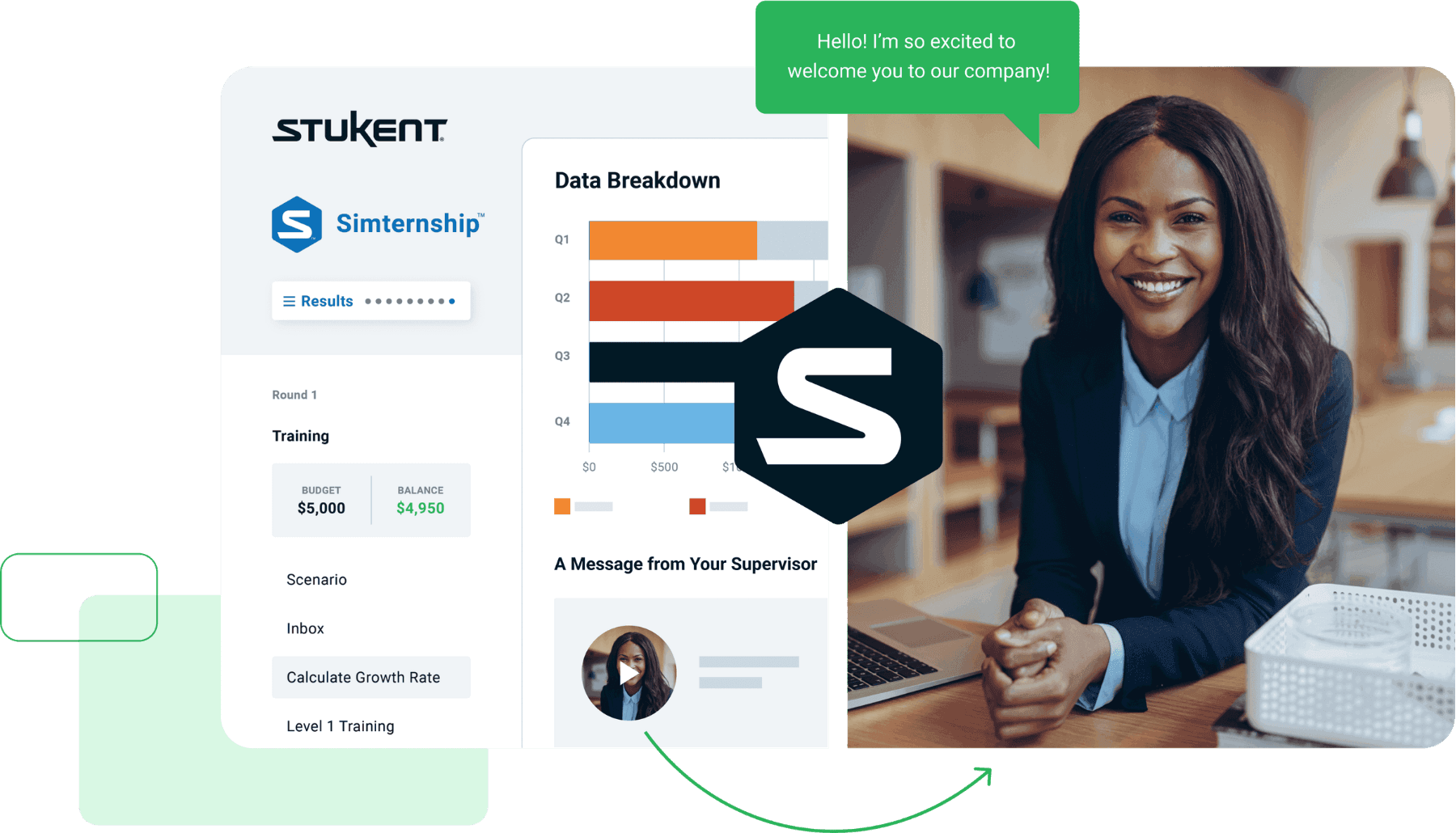
Up-to-Date and Relevant Resources
At Stukent®, we build the tools you need to modernize business education for today’s dynamic industries. Simternships® allow your students to step into real-world professional roles, while cutting-edge courseware reduces your preparation time.
View Courses
Building Creativity: How to Help Students Become Creative Problem-Solvers
BLOG
Read Now
How to Increase Student Engagement without Burning Out
BLOG
Read Now
ePortfolios: Documenting and Sharing Real-Life Experiences
WEBINAR
Watch Now
Upgrade Your Gradebook: How Auto-Graded Features Support Teaching and Learning
BLOG
Read Now
Mastering the Virtual Classroom: Best Practices for Online Teaching
WEBINAR
Watch Now
Your AI Teaching Tool Kit: Q&A on Innovation in Education
WEBINAR
Watch Now
Encourage AI Literacy, Not Dependency
Many institutions have moved away from banning AI. Instructors are shifting their focus to emphasize AI fluency in 2026 by teaching students how to partner with AI tools ethically and ensuring graduates are competitive and competent.
"My 2026 teaching resolution is to help my students see the value in using AI to assist them in their future, without making it do all of the work. I want them to understand its value but also know how to use it effectively."
- Jayne Minick, University of Southern Indiana
"I have two resolutions in mind: 1) Make AI a natural, empowering part of learning and not just an add-on. 2) Mentor more faculty to create a ripple effect of excellence in my team."
- Dr. Avisha Sadeghinejad, University of Arizona Global Campus
"In 2026, I will shift from policing AI use to cultivating ethical research practices that develop students' authentic scholarly voices. I will establish clear, discipline-specific guidelines for AI use that require transparency, critical oversight, and authentic intellectual engagement."
- Carol Swett, California Lutheran University
"Reexamine my courses to ensure that I am not simply teaching my students what an AI could do for them. I want to teach things that will help my students provide a value-added job for their employers that AI could not provide instead of them. It is not about worrying that students could cheat with AI but that they need to acquire knowledge and skills that will make them employable not replaceable by AI."
- Carlos Ferran, Governors State University
Instructor AI Strategies
Professors' goals for AI demonstrate a strong commitment to strategic and intentional integration. They plan to teach practical AI skills, maintain clear usage guidelines, and continue to research and use AI themselves.
"We will be doing a lot of role-playing where we use AI to practice."
- Jayne Minick, University of Southern Indiana
"For the first [resolution], in every course I teach and redesign, I will intentionally embed at least one high-value AI skill students can use in the workplace, of course, paired with clear guidance on ethics and transparency. For my second resolution, I plan to support newer associate faculty members on my team by sharing best practices, cocreating templates, and offering small “micro-mentoring moments” to enhance teaching quality across the marketing program."
- Dr. Avisha Sadeghinejad, University of Arizona Global Campus
"Make AI use discussable, not shameful. Value visible intellectual development. Teach ethical use rather than playing "gotcha." Design assignments that require genuine expertise. AI as a tool requiring human verification, never a substitute for thinking. Frame integrity as essential to scholarly identity."
- Carol Swett, California Lutheran University
"Evaluate my courses and examine the capabilities of AI to determine what I need to teach."
- Carlos Ferran, Governors State University
Resources to Support Your AI Resolution
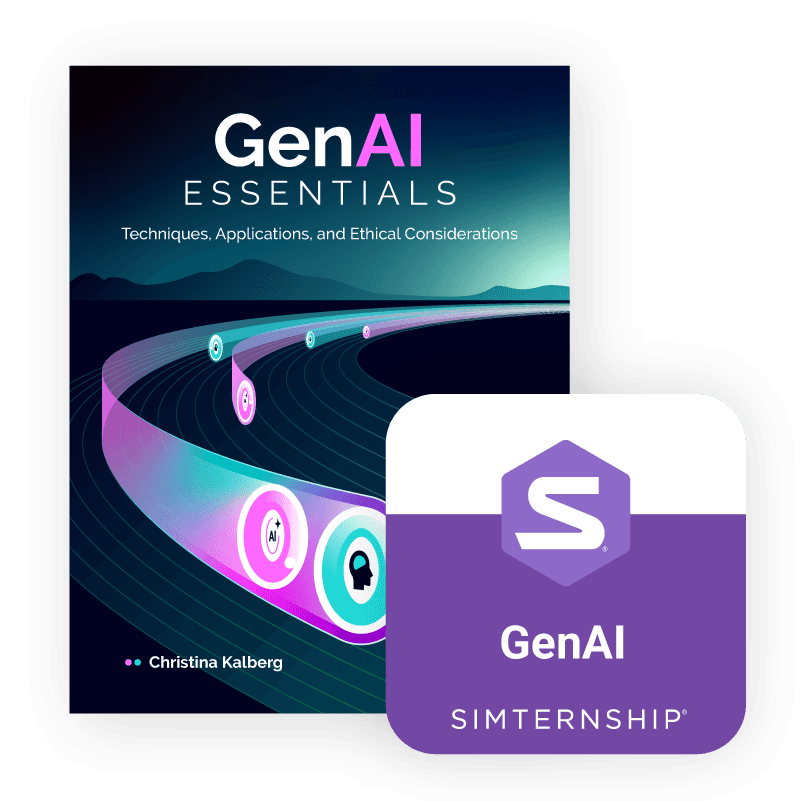
GenAI Essentials
The GenAI Bundle gives you everything you need to integrate ethical, effective AI practice into your course. This course blends ethical theory with hands-on skills such as prompt engineering, bot training, and AI-integrated workflows, preparing students to leverage AI in the workplace.
Learn About GenAI
AI in Marketing
Not an AI expert? No problem. This Micro Module is designed to fit any marketing course, introducing students to AI fundamentals, ethical considerations, and practical applications.
Learn About AI in Marketing
AI Resources for Business Courses
AI EDUCATOR GUIDE
Download
AI Resources for Marketing Courses
AI EDUCATOR GUIDE
Download
GenAI Essentials: A Three-Part Guide to Teaching for an AI Future
WEBINAR
Watch Now
Cheating or Changing: The AI Debate in Modern Classrooms
BLOG
Read Now
AI Resources for Communication Courses
AI EDUCATOR GUIDE
Download
Turnkey and Engaging AI Assignments
ASSIGNMENTS
Download
5 Skills Your Students Can Sharpen with AI & Prompt Engineering
BLOG
Read Now
How Accounting Professionals Are Embracing AI and What It Means for the Classroom
BLOG
Read Now
Incorporate Experiential Learning
There is significant fatigue regarding standard lectures. Professor responses share a common goal to "flip" the classroom — moving content consumption to homework so class time can be used for simulations, workshops, and active "doing."
“In 2026, I commit to elevating my Organizational Behavior teaching by integrating evidence-based pedagogy, real-world organizational cases, and active-learning formats that strengthen students’ critical thinking and managerial competence. I will redesign key modules to emphasize behavioral insights, leadership effectiveness, team dynamics, and ethical decision-making within modern organizations.”
- Akmal Khudaykulov, Webster University
“Reduce the number of lengthy written assignments.”
- Shane Perry, University of Maine
“In 2026, I commit to designing learning that is experiential, community-connected, and deeply meaningful, where my students apply frameworks to real businesses, real people, and real problems. I will build clear, structured pathways that set them up for success, integrate ethical and responsible AI practices, and foster a classroom grounded in psychological safety, high standards, and purpose. I will focus on helping students grow and master their skills so they can lead with competence, compassion, and impact. I will teach with purpose, knowing that one conversation, project, or moment of encouragement can change a student's path.”
- George Perez, Ph.D., Walla Walla University
“My 2026 teaching resolution is to incorporate at least one interactive activity per hour of lecture, whether in-person or online.”
- Therese Gedemer, Marian University
“Introduce more games and fun/engaging activities in class. Everyone's depressed and bored.”
- Christina Giakoumaki, American College of Greece
Instructor Experiential Learning Strategies
Experiential learning is key to many of the resolutions and strategies professors shared. Educators are focusing on more direct and hands-on learning, as opposed to passive learning and lectures.
“Integrate weekly active‐learning modules (mini case debates, role-plays, simulations). [...] Use digital simulations (e.g., team-conflict simulations, leadership style assessments). Apply data-driven learning tools for quizzes, analytics, and personalized feedback. [...] Incorporate recent organizational cases from tech, retail, and service industries. Invite 2-3 industry guest speakers to discuss leadership, motivation, and team dynamics. Assign experiential projects where students diagnose real organizational behavior problems.”
- Akmal Khudaykulov, Webster University
“Use more discussion board prompts that focus on brevity, reinforce audience-tailored communication skills, and provide opportunities for students to revise their writing on core topics.”
- Shane Perry, University of Maine
“By prioritizing experiential learning and connecting theory to practice in every class.”
- George Perez, Ph.D., Walla Walla University
“I plan to execute this by having at least 1 or 2 activities ready for use for each primary topic I will be covering. This will allow for a choice of activities, dependent on skill level of students. I will also put stop tabs in my presentations to ensure I don't miss my activity opportunities.”
- Therese Gedemer, Marian University
“Careful planning of course structure, introduction of workshops, simulations, interesting discussions on real cases and phenomena, games, and quizzes.”
- Christina Giakoumaki, American College of Greece
Resources to Support Your Experiential Learning Resolution
Simternships & Courseware
Stukent Simternships and courseware are backed by leading pedagogical techniques and work-integrated learning practices. Simternships increase student engagement, facilitate knowledge transfer to real-world scenarios, and support long-term retention of information. Stukent courseware is packed with hundreds of educational resources to help keep your lessons engaging and effective.
View Courses
Designing an Experiential Course with Real-World Client Collaboration
WEBINAR
Watch Now
How Virtual Work-Integrated Learning Is Transforming Education
BLOG
Read Now
Panel Discussion: How to Utilize a Simulation in Your Course
WEBINAR
Watch Now
Instructional Design Strategies in Higher Education: How EdTech and Institutions Can Work Together
WEBINAR
Watch Now
How Can Immersive Learning Transform Your Classroom?
BLOG
Read Now
Engage, Enrich, Encode: How the E3 Learning Experience Boosts Learning Outcomes
BLOG
Read Now
Provide Career-Relevant Experiences
If students can't see the job application of what they're learning, they're less engaged and retain less information. Resolutions this year are focused on soft skills, resilience, and aligning learning objectives with industry needs.
“My teaching resolution is going to make sure every project I have assigned for my classes has life beyond the class.”
- Karen Freberg, University of Louisville
“Bring more real life experiences and projects into my course.”
- Amanda Coffey, St. John Fisher University
“To bring in outside organizations to my classes and allow my students to work on projects for them.” - Kendra Corman, Rochester Christian University
“Make my courses more relevant to industry needs.”
- Atefeh Yazdanparast, Clark University
“To teach in a way to prepare students to be ready for the changing work world from the moment they graduate. They need to be career ready, resilient, and open to change.”
- Judi Lakner, Baldwin Wallace University
Instructor Career-Ready Strategies
Instructors are relying on a few key methods to incorporate more career relevance into their courses. Guest speakers and real-world projects are popular strategies for bringing career preparation into the classroom.
“I am going to update my assignments to tie in more applicability but also change the format of the assignment asking the students to not just create the assignment, but document the process as a TikTok or IG Reels video. Showing how they went about the project, lessons learned, and tips for future students as they go into this class in social media.”
- Karen Freberg, University of Louisville
“Get some guest speakers, owners of companies and create projects for the students to work on. They can also hear about their experiences building and maintaining their brand.”
- Amanda Coffey, St. John Fisher University
“Reaching out to the nonprofits through the chambers of commerce and having them apply to be a class case study.”
- Kendra Corman, Rochester Christian University
“Certifications and hands-on projects.”
- Atefeh Yazdanparast, Clark University
“Use of technology and staying abreast of the future career outlook.”
- Judi Lakner, Baldwin Wallace University
Resources to Support Your Career-Ready Resolution
Simternships
Stukent Simternships treat students like professionals, asking them to apply new knowledge to real-world problems. This level of immersion increases student engagement, knowledge transfer to real-world scenarios, and long-term retention of information. Students leave the Simternship with a list of new skills they can immediately add to their resume.
View Courses
Soft Skills for Success: Preparing College Students for the Workforce
BLOG
Read Now
How Simternships Take Students from Classroom to Career
BLOG
Read Now
Increasing Student Employability and Career Readiness
WEBINAR
Watch Now
Teaching Students to Build a Career Portfolio: A Step-By-Step Guide for Educators
BLOG
Read Now
Designing an Experiential Course with Real-World Client Collaboration
WEBINAR
Watch Now
AI for the Future: Equipping Students for Tomorrow's Workforce
WEBINAR
Watch Now
Read the Blog